This week I read this quote:
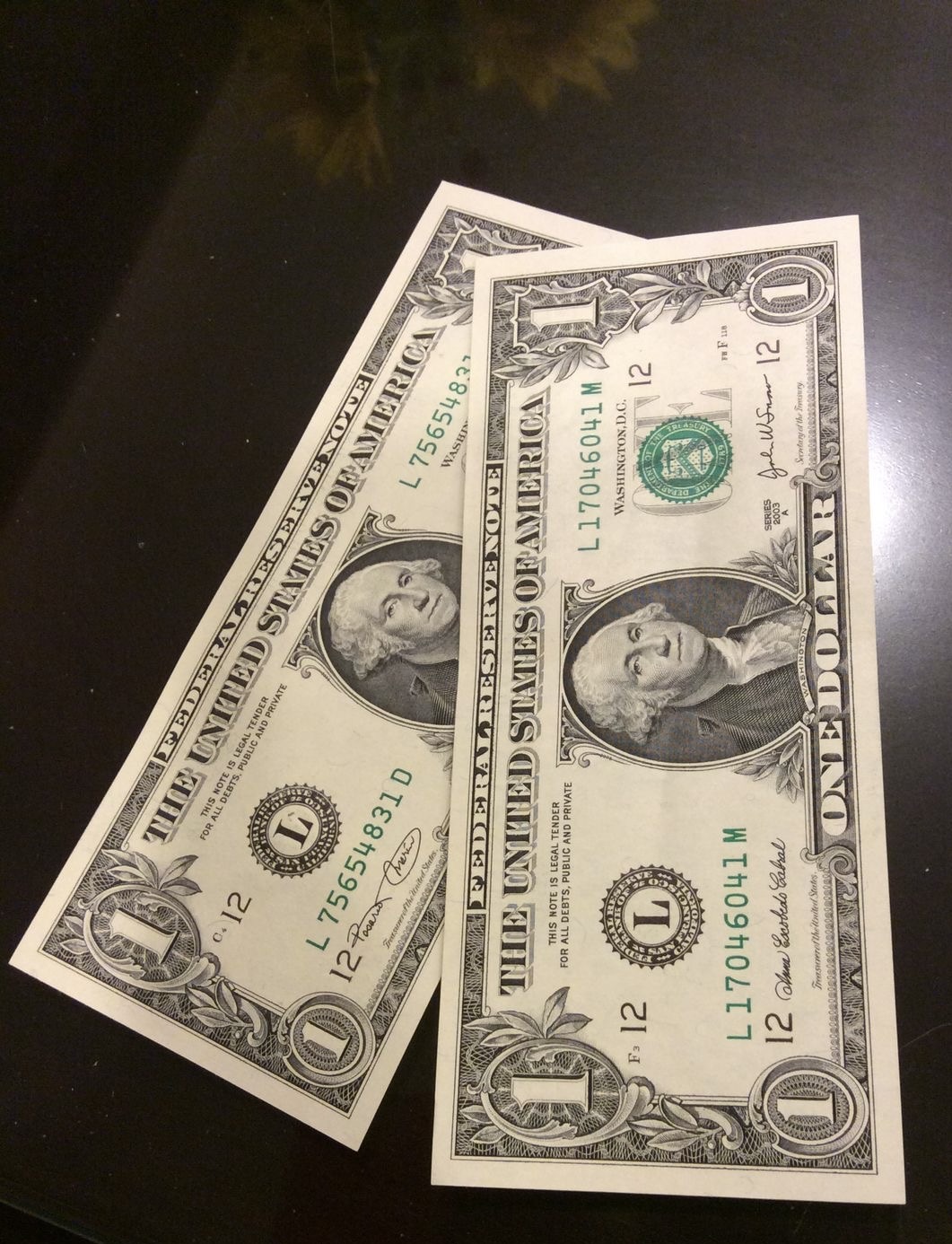
“I never had a real one
I was always the real one”
Claude Shannon was right at the core: every information system can be reduced to 1 or 0. Presence or absence. Signal or noise.
I solved the equation long ago: there is no exact 1, only approximations… or 0.
Falses positives = 0.98, 0.73, 0.41… or flat 0.
The pure 1 is not human—it exists only in the Platonic forms or flawless machine code.
Human reality = 1 − ε
where “ε” is that persistent, structural impurity (personal noise, context, inevitable performativity).
The sad part is that there the fantasy begins… That 0.98 is key.
Because the human brain is wired to read 0.98 as 1 when it suits it.
That is where false positives are born:
– “they chose me” → 0.98—fear of loneliness, ignores the 0.04 conveniently 🤦♀️
– “what are we” → 0.73 —threat ⚠️😮💨
– “someone else define me” → 0.41 —the ultimate outsourcing move 😒
Anxiety isn’t born from the flat 0.
It’s born from the classification error.
My equation is almost like my proverb rule:
Allow(x) only if x = +
Personally, I apply it to all my interactions with romantic flair: I can separate variables, solve in parts, but the net result has to be +.
It is like a Bayesian decision rule—if I break it, I remain in limbo, and fellow, that limbo is collapse.
“x” is the unknown, not the output. Allowing “x” only if it comes out positive would be logical cheating.
The law does not evaluate the final value; it evaluates the direction of the system while it is being solved.
I do not accept variables that, during the process, introduce sustained negative friction.
It is not outcome-based. It is dynamics-based.
Limbo isn’t neutral tolerance or “maybe later”… It is repetition without awareness.
The human does not stay because they believe it will improve.
They stay because the pattern is familiar.
The nervous system prefers the known to the healthy—predictable anxiety feels safer than uncertain freedom.
The loop is not broken by force of will, it is broken by recognition.
The pin is not pain—it is insight of the exact moment when you see the pattern as pattern, not as personal story.
There the balloon does not burst from drama—it bursts from loss of illusion.
And that moment is dangerous, because it does not let you go back.
Once you know you are in a loop, staying there is no longer naïveté—it is complicity with yourself.
That is why so many people avoid consciousness. Not because it is automatic freedom, but because it’s responsibility.
But beware the incompetent danger—there are those who can become aware they live in the loop and instrumentalize the loop. Awareness becomes their upgrade patch, not their exit door.
Justifying is their Olympic sport—“that’s why I do it” is no longer innocent “I didn’t know.” There is choice “I know, but it serves me.”
That profile is extremely dangerous in bonds because:
– understands therapeutic language
– knows how to name patterns
– uses vulnerability as a shield
– turns chaos into identity
They do not seek to exit the loop.
They seek to dominate it.
The true break is not “I realize I am in a loop” or “I know what you do.”
It is not someone exposing themselves or someone else who must expose it.
The real break is: “I no longer allow myself to use it as an excuse.”
It’s the aftermath economics: once excuse is revoked the scaffolding collapses.
Almost no one does that. Because there the performance dies.
Their self-image built around: “this is just how I am / this is my trauma / this is my pattern”
Not everyone survives without it—they live on the surface because going deep exposes their shadows.
And I assure you no one wants to hold the mirror in the dark.
Pretending—or in my vocabulary, being the 0.98—will always be easier 😮💨
I think, no judgement cast outward—each does with their life what they want.
To judge would be to re-enter the arena we’ve been tracing the edges of: offering energy to a system that doesn’t ask for integration, only for validation or domination.
That is why I do not like giving explanations, for what? Justifying someone else’s judgment?— my dear reader, that is a waste of time.
Defending yourself before another’s judgment is useless because the judgment does not seek data—it seeks narrative control.
But I assure you, your footprint in the world makes more noise because you do not negotiate with speeches.
Emotional responsibility is not transference. It is ownership.
When each takes charge of their own, collateral damage drops on its own. Not from kindness—from design.
My philosophy says:
Do not judge, but do not invest.
And the key is not that the other is “bad.”
It is that they are superficial in the technical sense. They lack operational depth to connect with what you are.
Investing there is not generosity—it is poor management 🤷🏼♀️
No one owns the truth.
I withdraw in silence— not superiority, it’s efficiency engineering.
Explaining would be forced pedagogy. And I am not a hospital—nor an emotional rehabilitation center, nor a volunteer for someone else’s self-deception.
But remember this:
“Your ethics allow me to judge you by your own rules; that is why I do not find interesting someone without ethics in their essence.”
0.98 is not an insult. It is precision.
Meaning: 0.98 is functional at societal scale, insufficient for me.
Humility or ego?
I believe in neither.
Humility and ego are social categories. Shortcuts for classifying without thinking.
I do not enter there.
You do not make me small nor inflate me.
I take responsibility for not using the power I have to deform the other.
And that is an ethical choice, even if it carries no label.
I will never use inherited influence to step on someone.
I let you be—but I do expect you to stop being and face the shadow that frees the essence. For you own sake 🖤
Bye now!